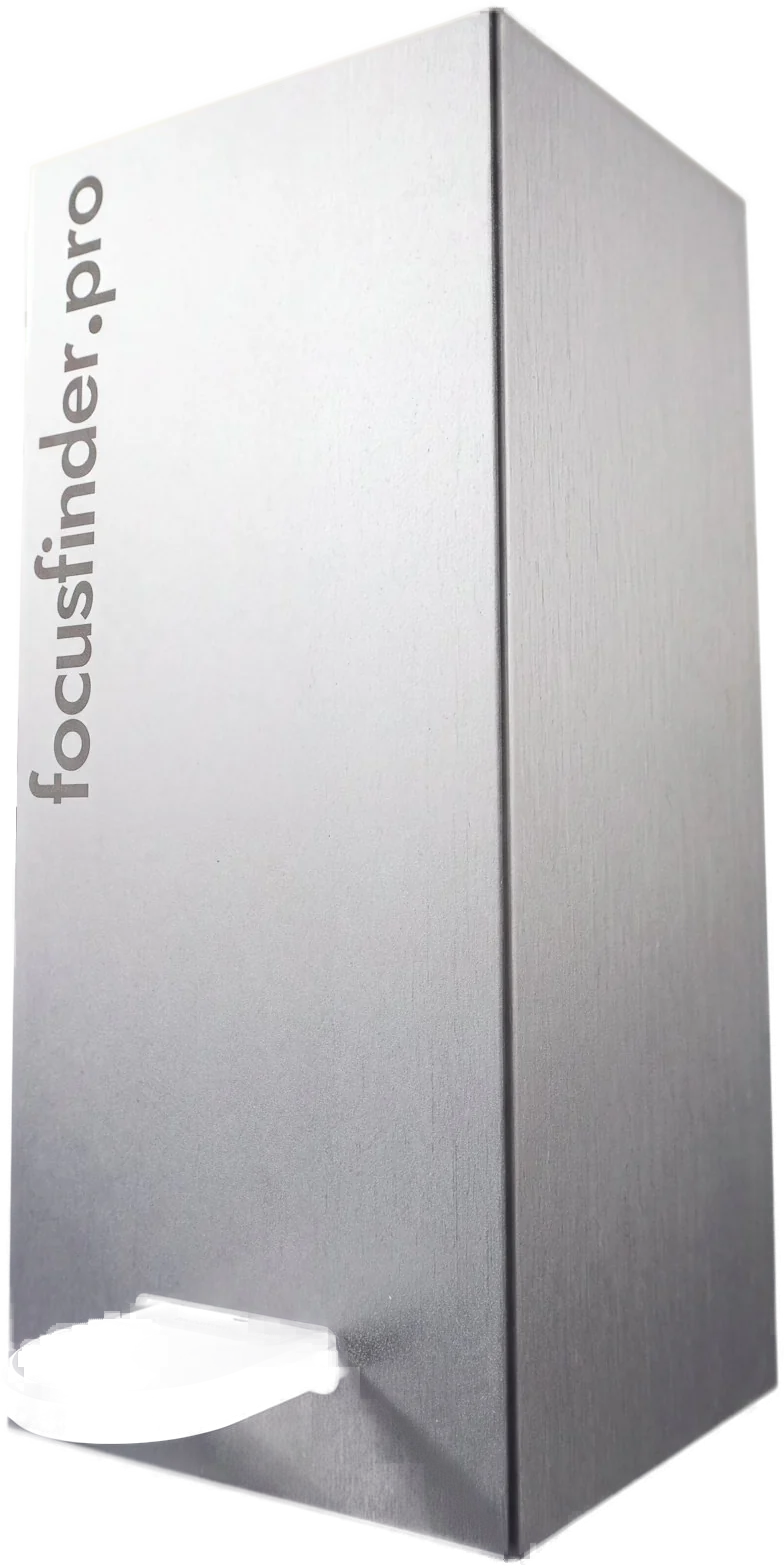
 real device · W39-100-000-042
Find the focal point. Measure it, don't guess it.
focusfinder.pro pins down the real focal-point position of a single-mode laser through a simple engrave-and-scan routine and numerical analysis — accuracy down to 50 µm, no subjective call by the operator.
A few microns off focus, and the weld goes unstable.
In battery and power-electronics welding, single-mode lasers join thin copper and aluminium at 250–300 µm. The focal point sits inside a beam waist only tens of microns wide — miss it and energy input drifts, producing spatter, lack of fusion, and unrepeatable joints. The fix is to measure the focal position, not estimate it.
A practical compromise between a pulse test and a camera rig.
The simplest focus methods are cheap but imprecise. Direct-beam camera systems are precise but cost tens of thousands and live inside one machine. focusfinder.pro lands in between — camera-class accuracy, a fraction of the cost, portable.
Accuracy down to 50 µm
Enough to hold a stable process on demanding materials in battery module manufacturing, where joints run 250–300 µm thick.
Simple measurement routine
Engrave, capture, analyze. No optics teardown, no permanent install, no machine changes to run a check.
No subjective assessment
The focal point comes from a Rayleigh-model fit of the beam caustic — numerical, repeatable, not an operator eyeballing the smallest spot.
One device, many machines
Portable across stations. A single unit covers a line of welders, which cuts deployment and operating cost versus one fixture per machine.
The price-to-accuracy ratio is the point
focusfinder.pro approaches the accuracy of complex vision setups at a rational implementation cost — the gap competitors leave open between a few-euro pulse test and a tens-of-thousands camera bench.
Three steps. Fully automated analysis.
The device engraves a designed line pattern at several focal offsets, scans the plate at high resolution, then fits the data to an ideal Gaussian beam curve — reporting the position of minimum effective beam diameter.
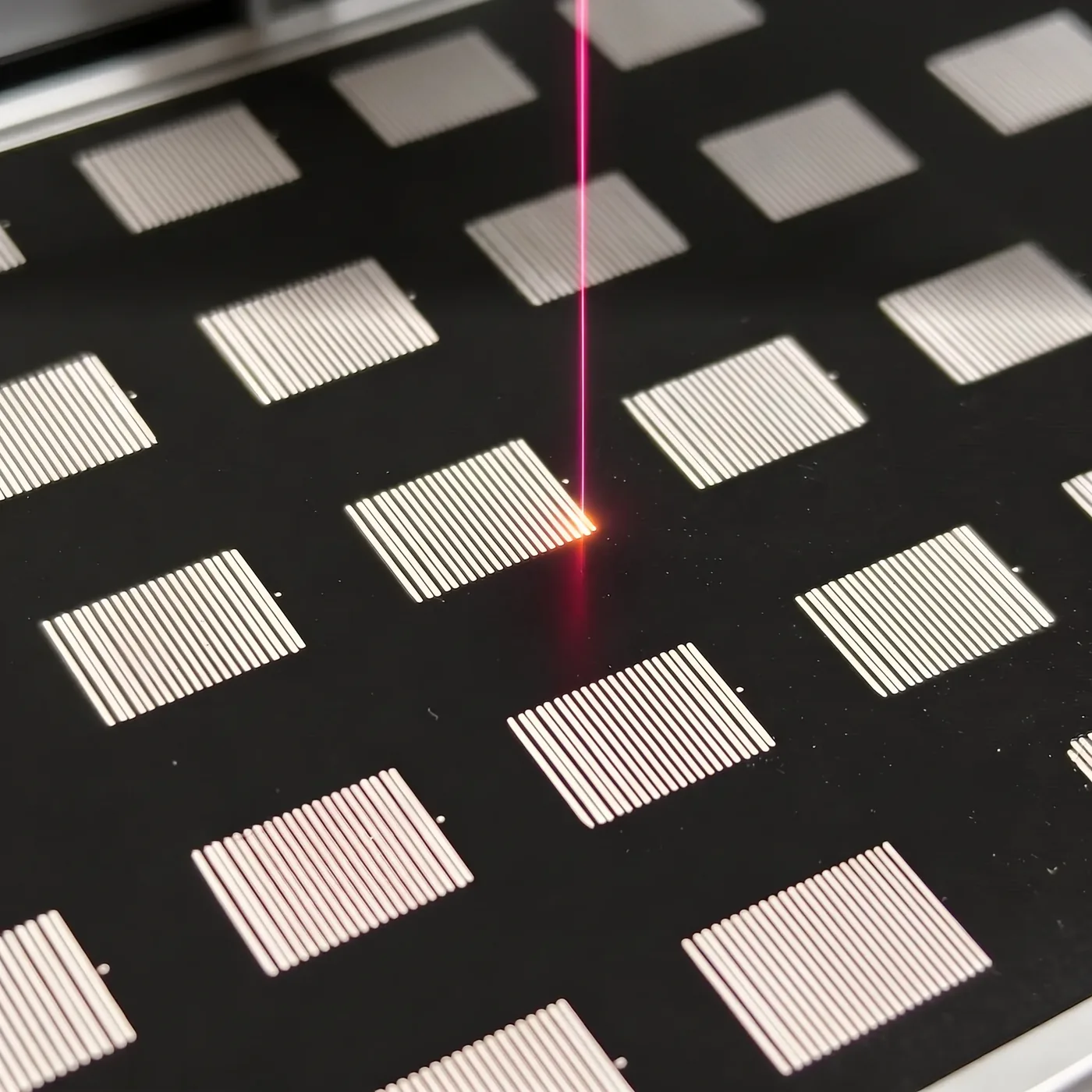 01 · ENGRAVE
Engrave the pattern
The laser writes a series of line groups on the measurement plate, each at a different focal offset along the beam axis.
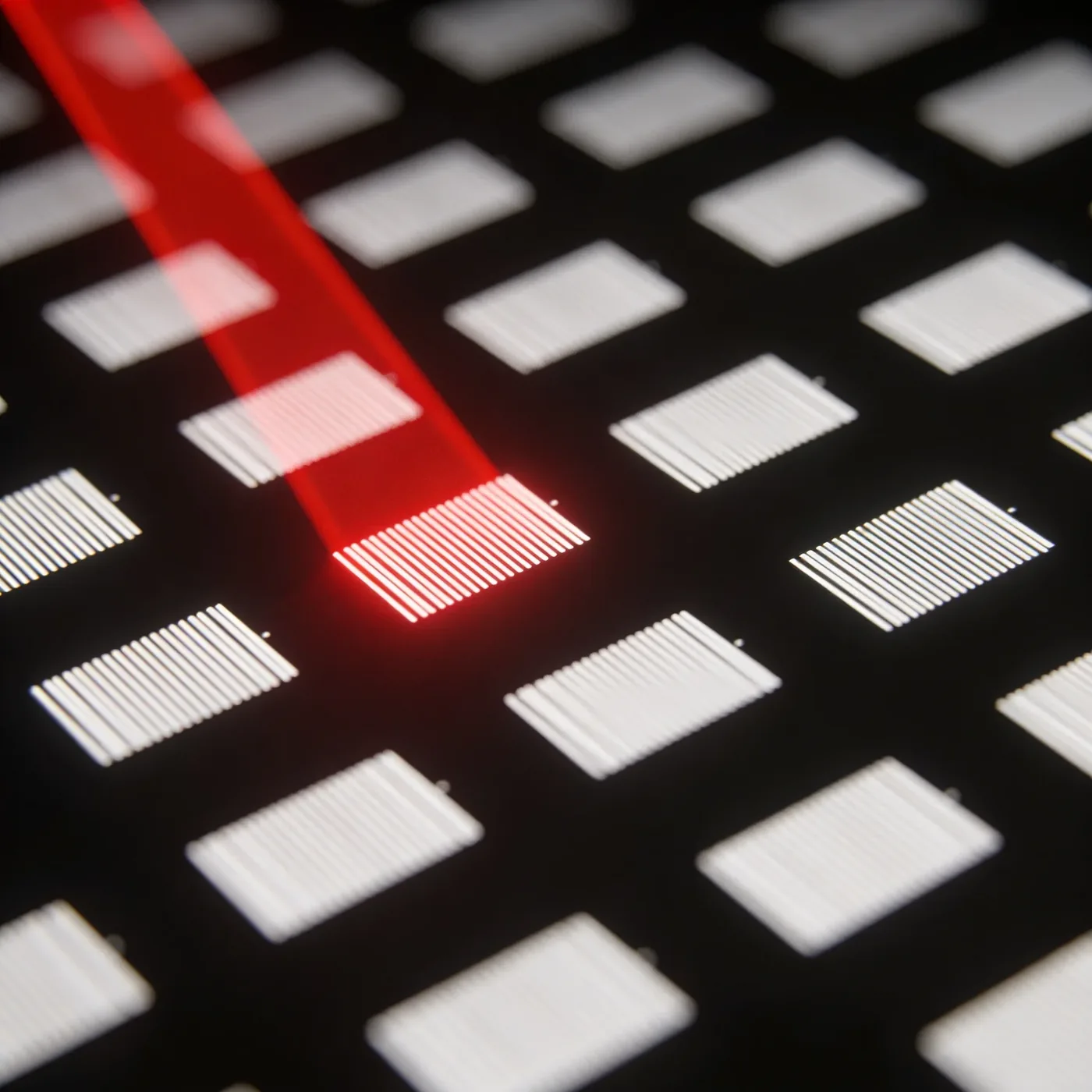 02 · ACQUIRE
Acquire the image
The engraved plate is digitised into a clean image, ready for numerical processing.
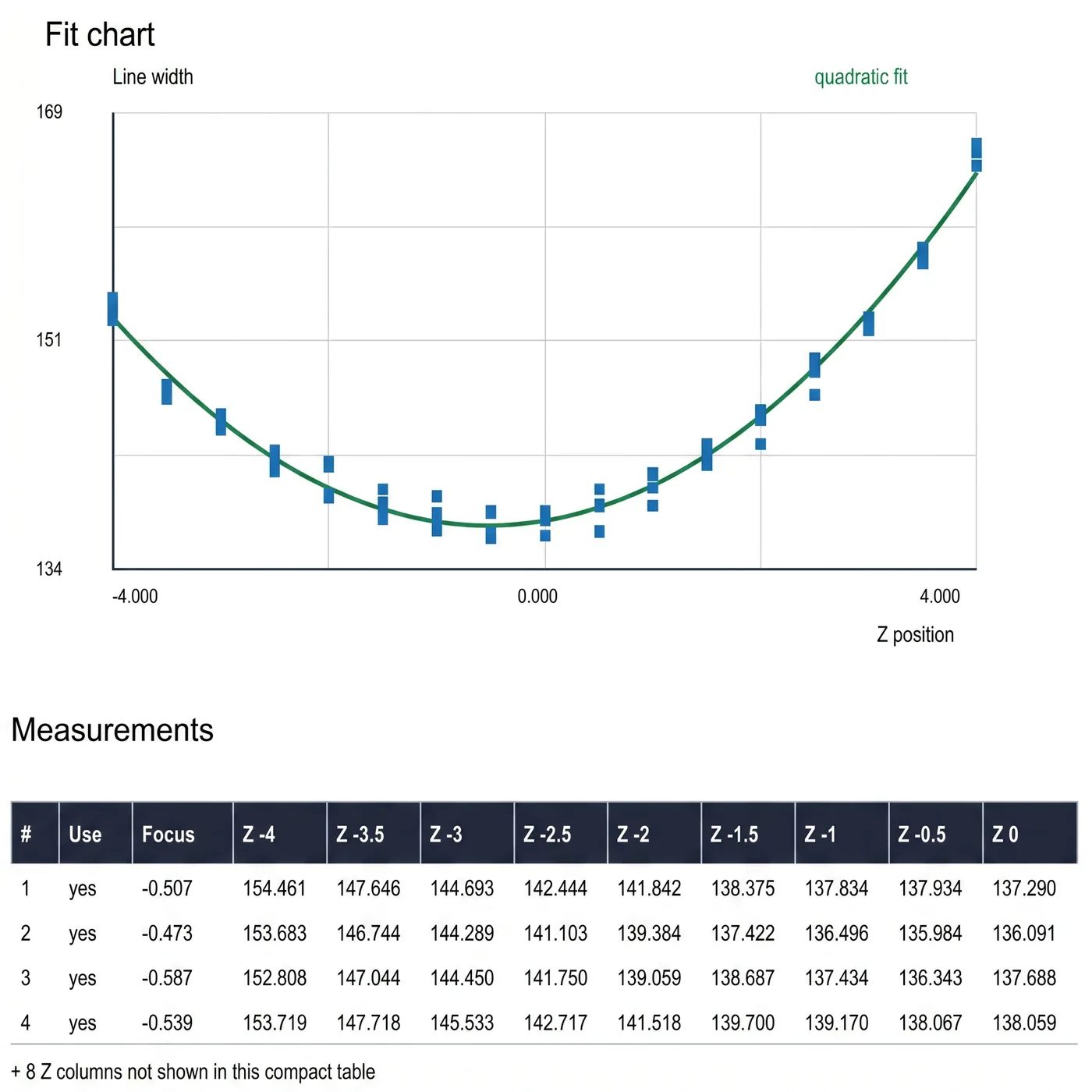 03 · RESULT
Automatic result
The data is fitted to the ideal beam profile and the true focal position is reported — no operator judgement in the loop.
Shop-floor hardware, built to RMA standard.
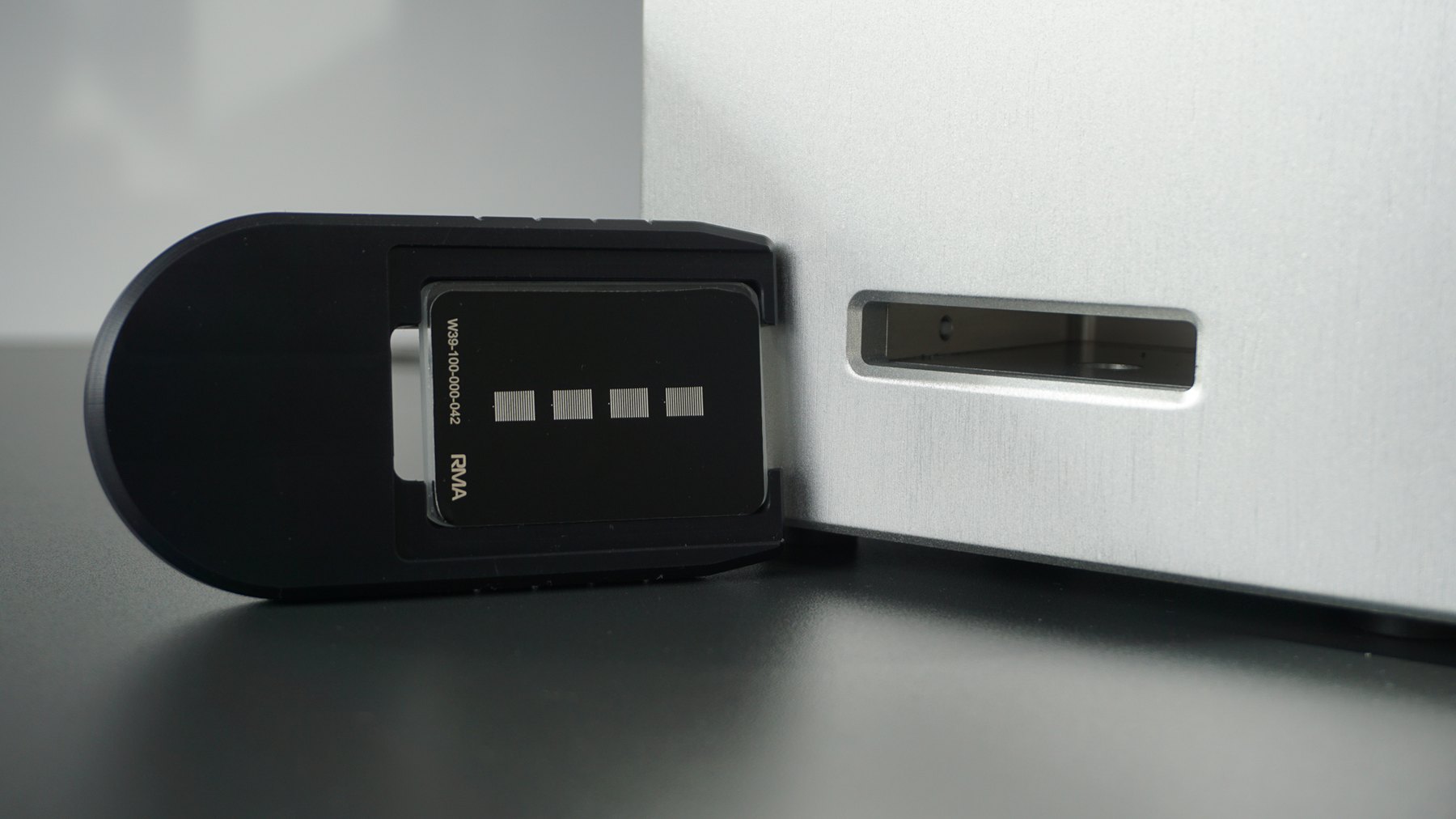
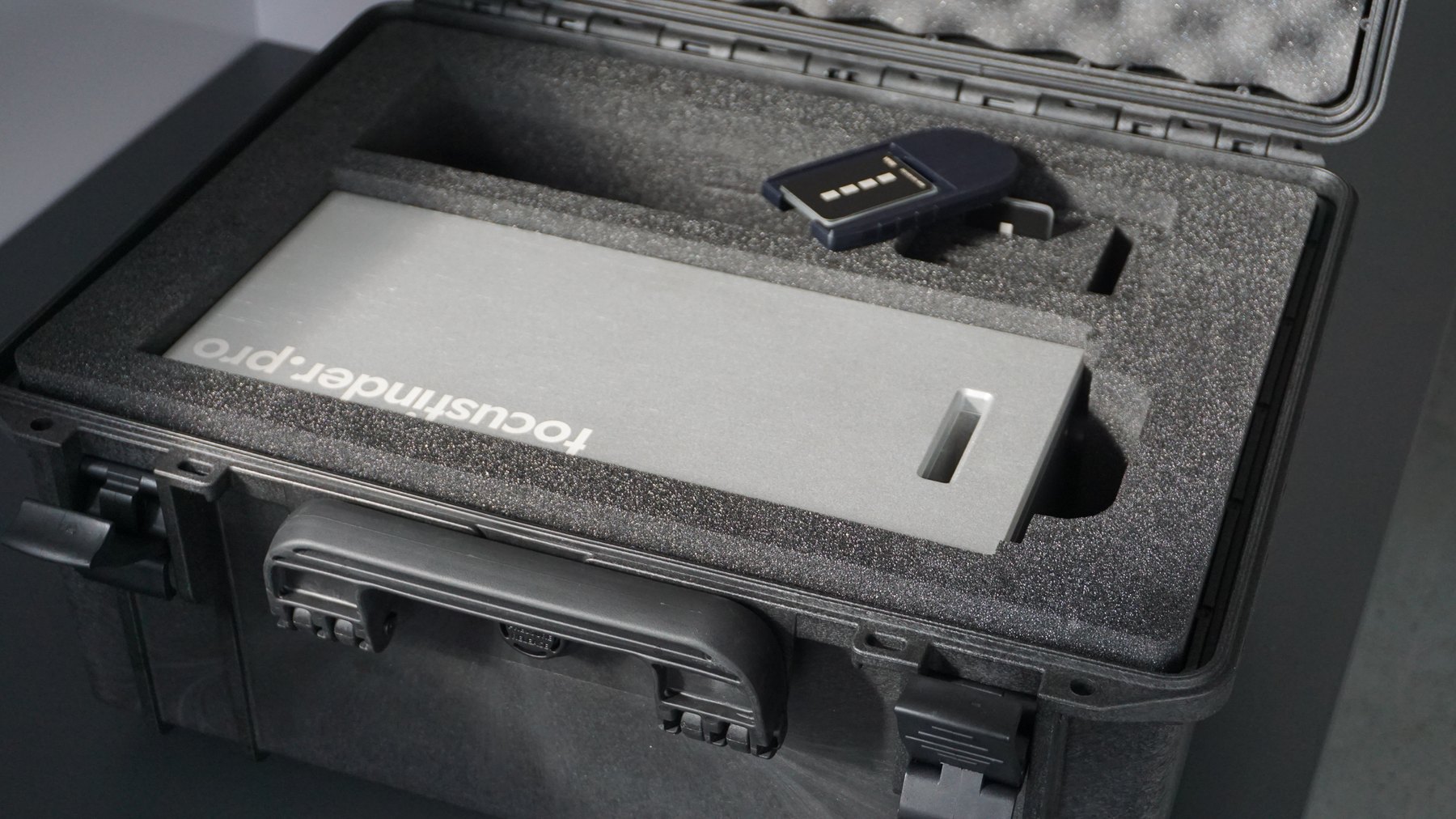
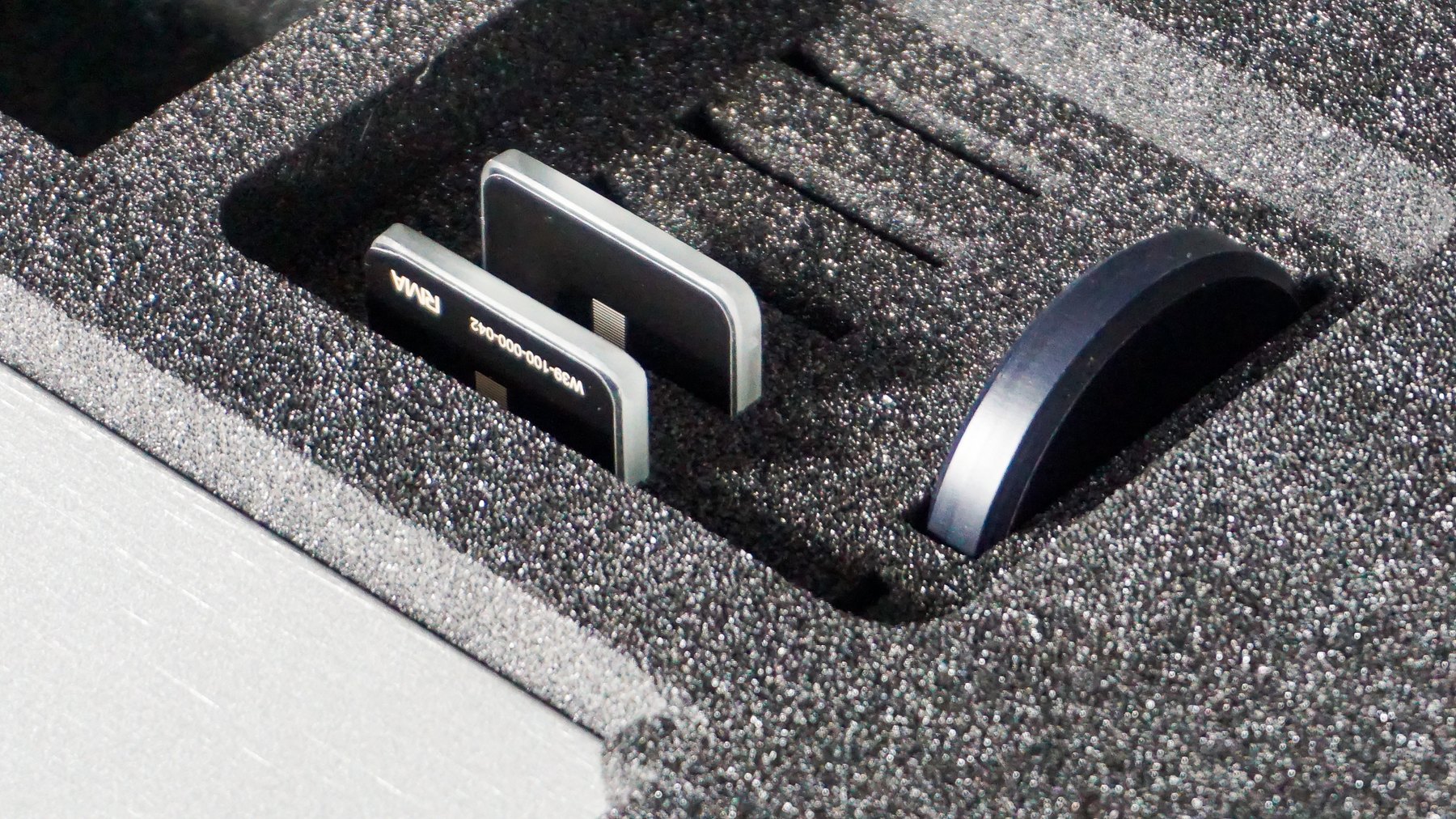
A brushed-aluminium scanner, a keyed measurement plate, and a foam-set transport case — serialised and ready to move between welding stations.

Built for small-spot, hard-to-weld work.
Power electronics
- Power modules
- Busbars
- Cell interconnects
- IGBT / SiC
Single-mode lasers
- Small-spot sources from 30 µm
- Infrared (~1060 nm)
- Green
- Blue
Hard-to-weld materials
- Copper
- Aluminium
- Stainless steel
- Bimetals
Where focusfinder.pro sits in the chain.
Focus setting is one link in a controlled welding process — from application validation, through per-machine focus, to monitored energy input and traceability.
Laser Application Center
Prove the joint and parameters before production.
focusfinder.pro
Set the focal position per machine, repeatably.
Controlled energy input
Run the process on a correctly focused beam.
Online monitoring
Log and trace results per cell.
Who measures focus with us.
E-Mobility & EV battery
Cell-to-busbar and module joining for traction packs.
ESS & energy storage
Grid and stationary storage module assembly.
Power electronics
Modules, interconnects and wide-bandgap devices.
Aerospace & defense
Drones and unmanned platforms with tight weld specs.
Industrial batteries
Forklift, marine and AGV power systems.
Precision manufacturing
Any single-mode process that lives or dies on focus.
From the RMA laser team.

Laser focal point measurement methods compared: pulse engraving, direct beam measurement, and focusfinder.pro
Pulse engraving vs. direct beam measurement vs. focusfinder.pro — accuracy, cost and practicality side by side.
Read →
Why the focal point of a single-mode laser is so hard to find — and how accurate you need to be
An invisible IR beam, a ~50 µm spot and a beam waist that won't become a point — and the accuracy each process needs.
Read →
Critical process parameters in battery laser welding — and how to monitor them
Power, speed, focal position and geometry — the four parameters that decide process stability, and how to monitor each.
Read →Take care of your process. We'll size the configuration.
Tell us your laser source, optics and materials — the RMA engineering team will match a focusfinder.pro configuration to your line.